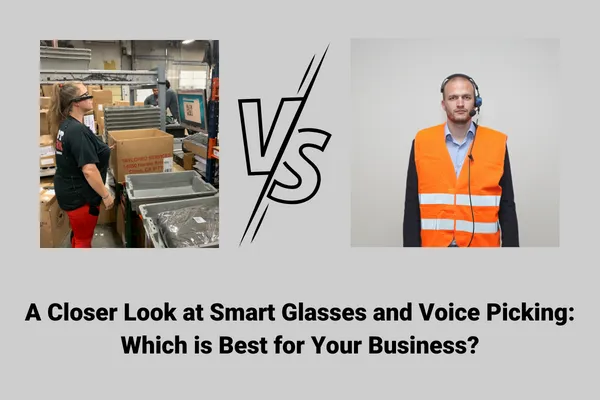
Smart Glasses vs Voice Picking: Which Is Best for Your Warehouse?
Smart glasses and voice picking both keep a worker’s hands free. The difference is how the instructions arrive: voice speaks them, glasses show them. Which one fits depends on what your team needs to know at each step.
How Voice Picking Works
The worker wears a headset. The system speaks the next location and quantity, and the worker answers out loud, often reading a check digit at the location to confirm they are in the right spot. Voice is simple to roll out and keeps eyes on the aisle. Its limits show up when a task needs more than words: telling similar items apart, reading a label, or working in a loud area where speech is hard to hear.
How Smart Glasses Work
Smart glasses put the next task in the worker’s line of sight: the location, the item, the quantity, and sometimes a picture of the product. Many can also scan barcodes and take spoken commands, so the worker confirms with a scan instead of reading digits aloud.
Which One Fits?
Voice fits fast, repetitive picking where the instruction is short and the items are easy to tell apart. Glasses fit work where seeing helps: receiving, picking from many similar items, checking labels, or getting help from an expert who is not on site.
You Don’t Have to Choose
E2 Vision combines both. It puts the next task in the operator’s line of sight, takes voice commands, and checks each scan so a wrong item is flagged before it moves on. It runs on Vuzix M400 smart glasses with ProGlove scanners and supports picking and receiving.
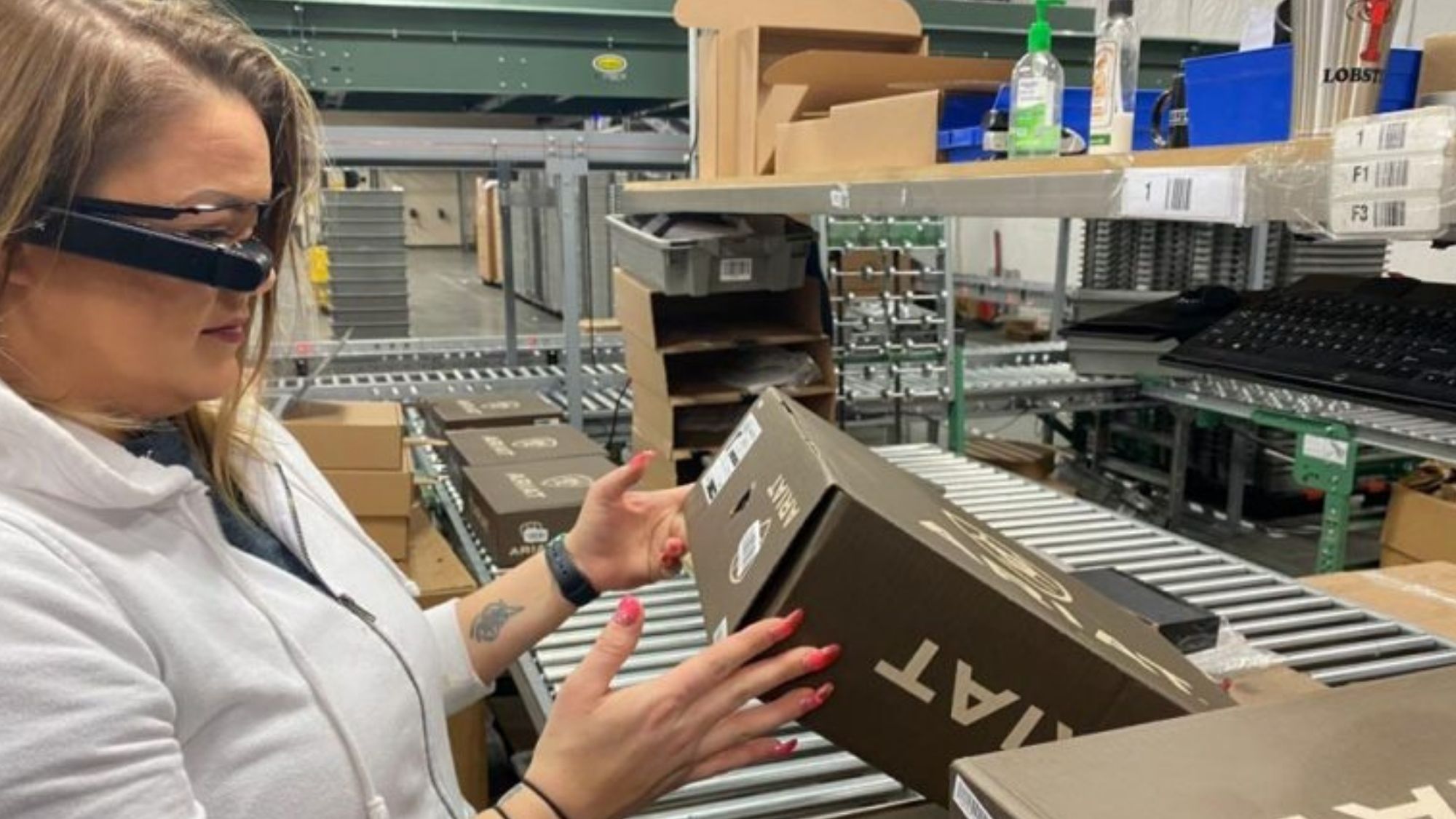
At Boot Barn, E2 Vision raised receiving productivity 26 percent. At LeMans, Remote Assist let auditors and experts see through a worker’s glasses from hundreds of miles away.
See how E2 Vision works, read our case studies, or find answers to common questions.
Ready to talk about your warehouse? Book a discovery meeting or call 612-225-1961.